- Also Known As
- Landwerk Ahrensdorf bei Trebbin
- Type of Hakhshara
- Youth Aliyah preparation, Middle Hakhshara (Mi-Ha), regular Hakhshara
- Founded
- 1936
- Opened
- October 21, 1936
- Closed
- 1941
- Operating Area
-
30 hectare30 hectares of leased land including the hunting lodge, gardens, orchards and additional farmland and woodland
- Areas of Training Offered
-
horticulture, agriculture, animal husbandrygardening (vegetables, trees, plants); livestock farming (cattle, sheep, goats, horses); poultry farming (chickens, geese, turkeys, ducks), workshop (electrical work, locksmithing and metalwork, carpentry)
- Description
-
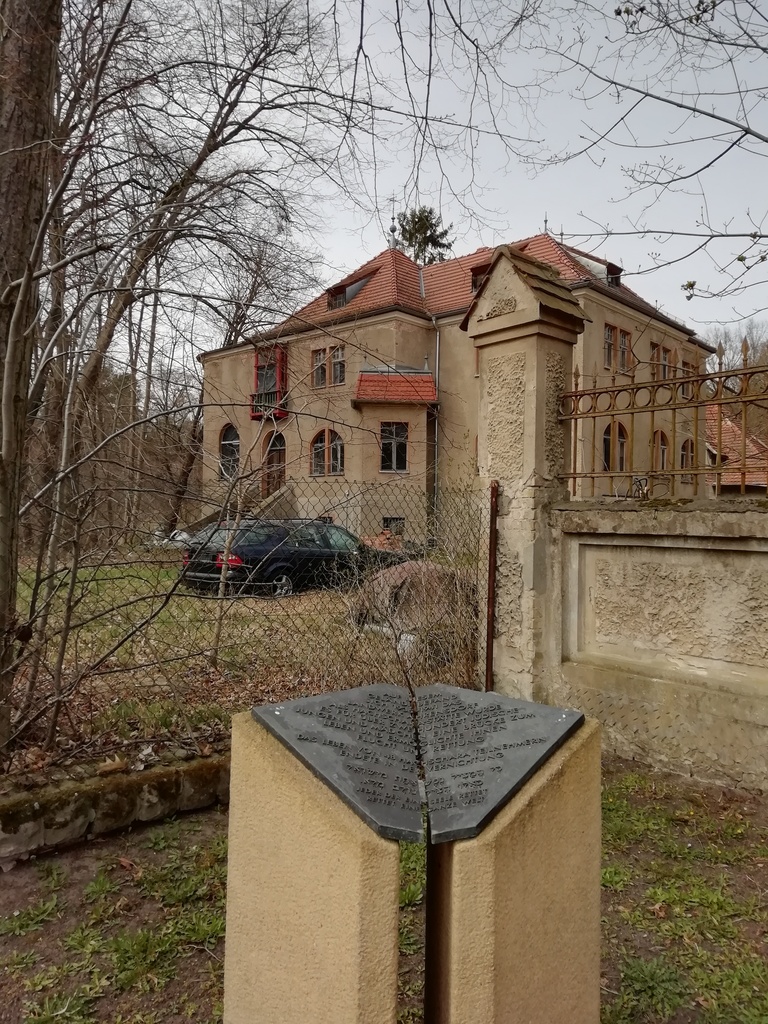
The agricultural training center Landwerk Ahrensdorf was established in 1936 in the hunting lodge known as Berdotaris and the surrounding estate. The estate, which had long been inoperative, was located in what is now part of the Nuthe-Urstromtal municipality just outside the city of Trebbin, about 30 kilometers away from Berlin. Here, between 1936 and 1941, more than 300 Jewish children and adolescents were prepared for a life in Palestine. The department of vocational training and retraining of the Reich Representation of German Jews (Reichsvertretung der Juden in Deutschland) leased the hunting lodge along with the 30-hectare estate from Walter Metz, a seed wholesaler from Berlin. He had named the lodge “Berdotaris” after his daughters Berta and Dora.
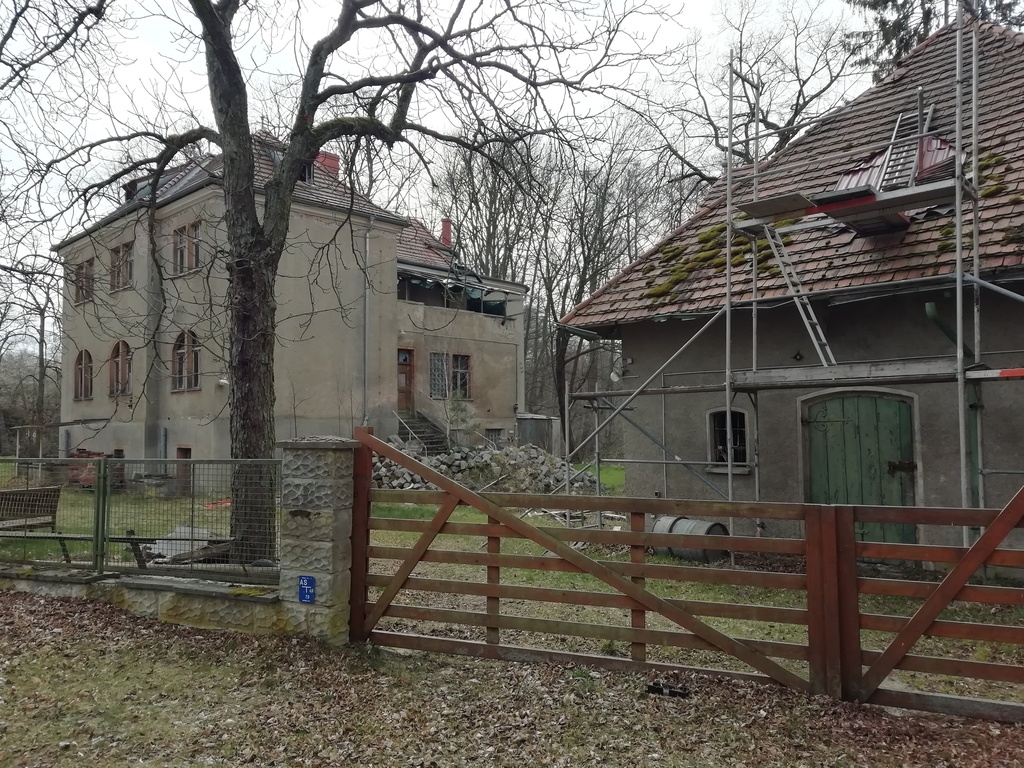
In Ahrensdorf there were 60 places for young men and 20 for young women, which they first had to furnish themselves. The girls stayed in the main building in four dorm rooms, the boys had two dorm rooms in an outbuilding which had originally been used for storage. They came from cities like Berlin, Breslau (Wrocław), Cologne, Leipzig, Hamburg and Stettin (Szczecin). There was also group from Vienna, which came to Ahrensdorf at the end of 1938.
The first director in Ahrensdorf was Hans Winter, who set up and furnished the training center together with the participants and remained as director until 1938. He was supported by one assistant, two Jewish gardeners and several women who managed the housekeeping. All training was supervised and was reinforced and supported by regular lessons in agriculture from Martin Gerson and Friedrich Perlstein, who held a degree in agriculture.
The young men mainly received agricultural training while the young women were trained in home economics. The daily routine consisted of morning exercise, a morning roll call, practical lessons in the morning and theoretical lessons in the afternoon. The participants elected a council (Waad), which helped shape the organization of participants’ leisure time and work structure. The Waad was also intended to already introduce the young people to the self-governing structures of a kibbutz.
The grounds included fields and meadows, greenhouses, gardens, orchards and vegetable gardens and woodland. There was also a workshop for electrical work and locksmithing and metalwork as well as a sports field. From 1936 to 1938, the mayor of Ahrensdorf would come and plow the fields at the center with his horses. In return, the participants helped him with his harvest. Until 1938, the relationship and contact between the mayor and the center was cordial.
The first group from Ahrensdorf left for Palestine and another for Sweden in the fall of 1938. Training was to continue in Sweden and from there they would immigrate to Palestine.
On October 29, 1938, even before the November Pogroms, eight youths were unexpectedly picked up by uniformed police accompanied by civilians and taken away from Ahrensdorf in a truck. Only later did the remaining participants learn that their comrades had been among the over 15,000 Jews forcibly expelled from Germany in the so-called “Polenaktion” (the “Polish Action” or expulsion of Polish Jews from Germany) and taken to the border with Poland to be deported over it.
Inspections and control checks by the authorities happened almost on a daily basis at the center at this time. Thanks to a warning from the local police sergeant, the halutzim in Ahrensdorf were able to defend themselves in the main building from a planned attack on November 9, 1938. However, in the following years there were continual “visits” and harassment from the Gestapo. The atmosphere in Ahrensdorf changed: Many of the young people lived in fear, and the length of their stay at the center was reduced as the increasingly threatening situation accelerated their efforts to leave the country.
In 1939, mandatory delivery quotas and food rationing were introduced for Ahrensdorf, which made the situation increasingly difficult also in this respect. Before this, the participants were able to amply provide for themselves with food they produced. In addition, starting in 1940, the population became increasingly isolated, which made it extremely difficult to obtain food.
As a result of the November Pogrom, after consulting with Yishuv institutions and with the Gestapo’s approval, HeHalutz decided to begin preparations for illegal Aliyah. In Germany, these attempts were known as “Special Hakhshara” (Sonderhachschara or SH), elsewhere they were known as Aliyah B(et). Halutzim from Ahrensdorf were also among those on the various SH transports to Palestine. Ruth Effenberger, who reached Haifa with the SH7, drowned when the Patria sank in its harbor. Others from Ahrensdorf whose transport SH5 was stopped in Yugoslavia were murdered there in 1941.
The dissolution of the hakhshara in Ahrensdorf began in May 1941 and continued until October when the estate was completely evacuated and the lodge returned to the family who owned it. The young people who still remained in Ahrensdorf were taken to the “collection camp” (Sammellager) Neuendorf im Sande (near Fürstenwalde); in January 1942, others were taken to the “collection camp” Paderborn after they had been forced to finish clearing out Ahrensdorf. Together with the young people from Neuendorf, they were deported to Auschwitz in 1943.
So far, 302 young women and men who were in Ahrensdorf for hakhshara have been identified. Of these, 137 emigrated to Palestine with a few others going to England, Sweden and Denmark. Seventy-five were deported to the camps in Auschwitz, Theresienstadt, Riga and Majdanek. Only 37 of them survived. Nothing is known about the fate of 59 others. It is thanks to Ruth and Herbert Fiedler’s many years of work that these numbers and so much general information about the Ahrensdorf hakhshara site and the people involved is available and that its history is so well researched. The result of their work is a comprehensive research archive that was presented to the Teltow-Fläming district archives in 2014. In addition, they founded a support association in 1993, which promoted establishing an international contact center devoted to the hakhshara in Ahrensdorf. The aim was to create a meeting place and to preserve the heritage of the hakhshara in Ahrensdorf. In 1997, on their initiative, a memorial stele was erected in front of the (now privately owned) hunting lodge and remains standing there until today.
© CC BY-SA 4.0
© CC BY-SA 4.0

© Förderverein für eine Internationale Begegnungsstätte Hachschara-Landwerk Ahrensdorf e.V. (Hrsg.): „Träume und Hoffnungen“. Berichte, Erzählungen und Dokumente zur Hachschara-Stätte Landwerk Ahrensdorf, Luckenwalde 2001. Heft 1, S. 42.
- State of Conservation
-
partially preserved
main building (hunting lodge) preserved in its original state, other structural changes
- Related Organizations
-
Jüdischer Pfadfinderbund Makkabi Hazair (founder)
- Related Persons
-
Horn, Richard (associated)Posnanski, Artur (director)Schwersenz, Jizchak (Madrich:a)Smulewitz, Seew (Trainer)Treufeld, Werner (Trainer)Winter, Hans (director)
- Sources and Notes
- Eintrag Denkmale in Brandenburg ( https://ns.gis-bldam-brandenburg.de/hida4web/view?docId=obj09105671.xml )
- Literature
-
Anneliese-Ora Aloni-Borinski: Erinnerungen 1940–1943. Nördlingen: Verlag G. Wagner 1970.
Herbert Fiedler; Ruth Fiedler: Hachschara. Vorbereitung auf Palästina. Schicksalswege, Schriftenreihe des Centrum Judaicum. Teetz: Hentrich & Hentrich 2004.
Herbert Fiedler: Eine Geschichte der Hachschara, in: Gedenkstättenrundbrief (144) (08/2008). pp. 15–21. online: <https://www.gedenkstaettenforum.de/uploads/media/GedRund144_15-21.pdf>
Förderverein für eine Internationale Begegnungsstätte Hachschara-Landwerk Ahrensdorf e.V. Nuthe-Urstromtal/Luckenwalde (ed.): „Träume und Hoffnungen“. Berichte, Erzählungen und Dokumente zur Hachschara-Stätte Landwerk Ahrensdorf, vol. 1–7. Luckenwalde 2001.
Ulrich Schwemer: „Wer hätte das geglaubt!“ Erinnerungen an die Hachschara und die Konzentrationslager, Schriftenreihe des Evangelischen Arbeitskreises Kirche und Israel in Hessen und Nassau 14. Heppenheim 1998.
Recommended Citation
Nina Zellerhoff, Landwerk Ahrensdorf, in: Hakhshara as a Place of Remembrance. <https://hachschara.juedische-geschichte-online.net/en/site/2> [October 12, 2026].
Address
Löwendorfer Str. 2514947 Nuthe-Urstromtal